Both sides
Agent goals and customer goals.
Score what the agent did and what the customer needed, on separate tabs.
Playbooks score live calls against your rubric, the QA scorecard fills in on the task, and AI Assist drafts the next reply from your knowledge base. The agent decides what gets sent.
Managers review each score with the transcript beside it, and can change it.
100+ countries · Cloud, hybrid, or onsite · 1 to 1,000 seats
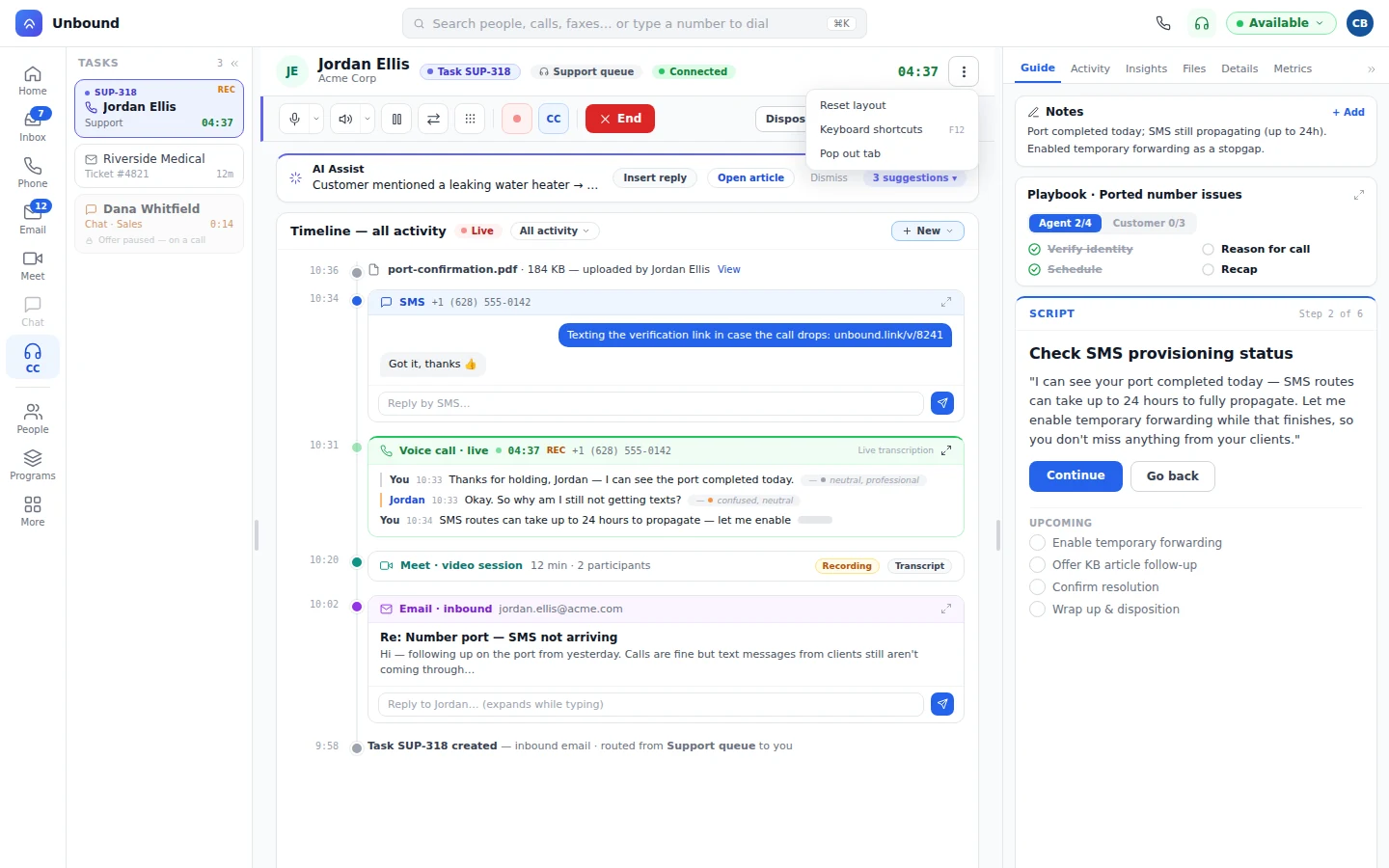
A playbook is your rubric written as goals. Once it's published, it runs beside live conversations, so the agent sees what's left and the manager sees who needs help now.
Score what the agent did and what the customer needed, on separate tabs.
Group goals by opening and greeting, problem identification, empathy, information gathering, and more.
Score each goal yes or no or on a scale, and mark which ones are required.
A playbook doesn't run on live calls until you publish it, and it follows the record type you choose.
The QA scorecard fills in as the conversation happens and stays on the task, where a manager can check it any time.
Bot conversations are scored against the same playbooks as your agents', so a bot that skips a required goal shows up in QA. You fix it by editing its playbook, scripts, or knowledge and publishing the change. How bots work
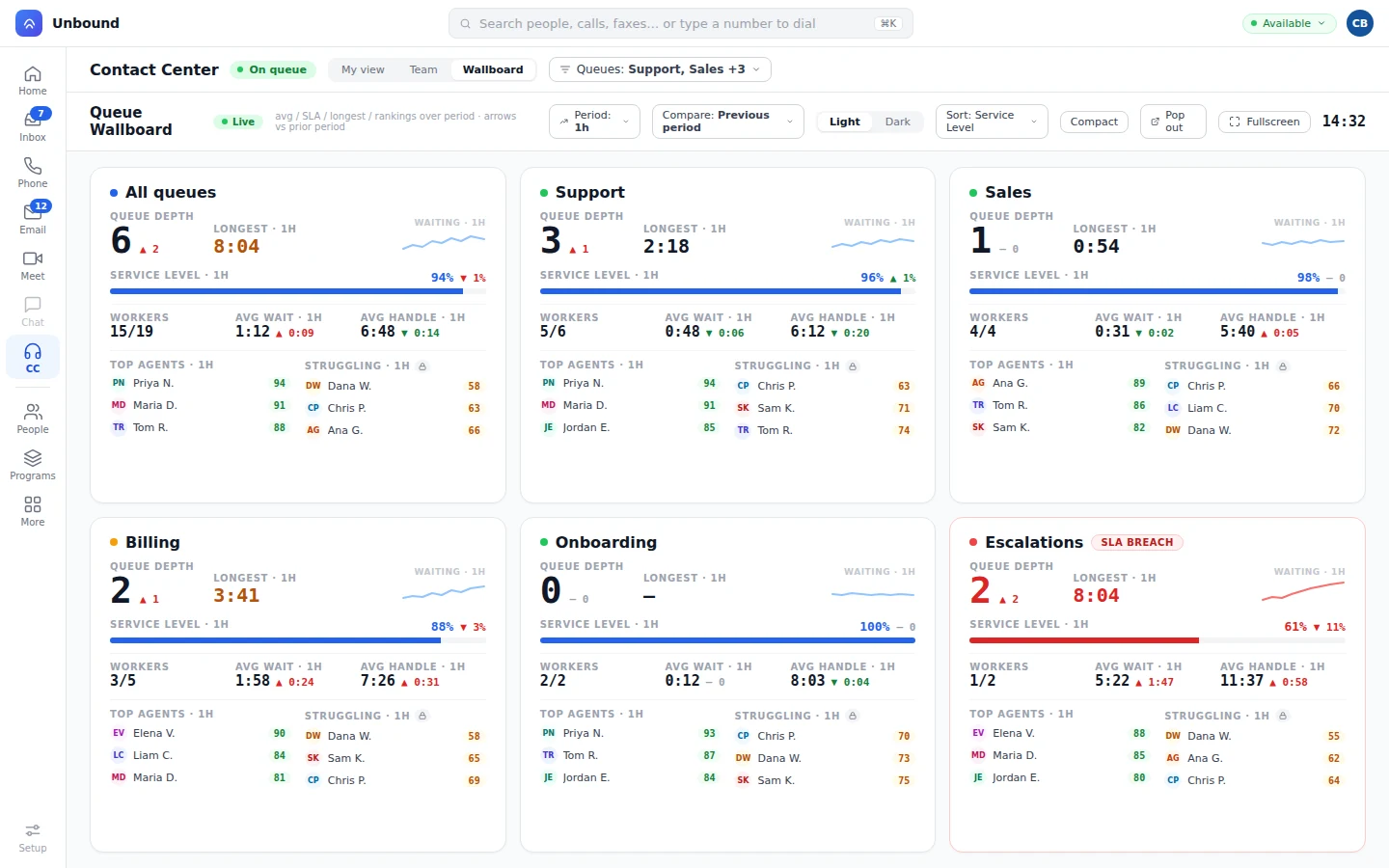
AI Assist works on the live task. It reads what the customer just said and drafts a reply from the conversation, the customer's record, and your knowledge base. That's the difference from a generic chat window: the context is already there, and nobody pastes customer details into another tool.
Playbooks, vocabulary, and the knowledge base sit together in Setup, and every suggestion traces back to them.
Your team writes the articles and keeps them up to date.
Knowledge grows from team chat, Meet, and internal calls, with security settings that keep private conversations private.
Calls, chats, and emails draw on the same articles, so the answer matches everywhere.
Live transcripts and real-time translation give a coach the customer's actual words.
No. It drafts the reply and suggests the next playbook step. The agent opens the source, reviews the draft, and inserts it.
Each playbook is a set of agent and customer goals, scored yes or no or on a scale, with required goals marked. It tracks every goal while the conversation's happening.
Yes. The manager reviews it next to the transcript and recording, and overrides it when the rubric got it wrong.
The knowledge base your team writes. The agent can open the source article before inserting the draft.
Start a 30-day trial with sample data loaded, publish a playbook, take a call, and watch the scorecard fill in. Then write your own rubric.