Queues
Any channel, one queue.
One queue can hold voice, chat, SMS, email, and task work side by side.
A queue holds calls, chats, texts, emails, and tasks under one set of rules. While callers wait, they can ask for a callback or leave a message instead of sitting on hold.
Admins build queues in Setup and see each one's service level against the target they set.
100+ countries · Cloud, hybrid, or onsite · 1 to 1,000 seats
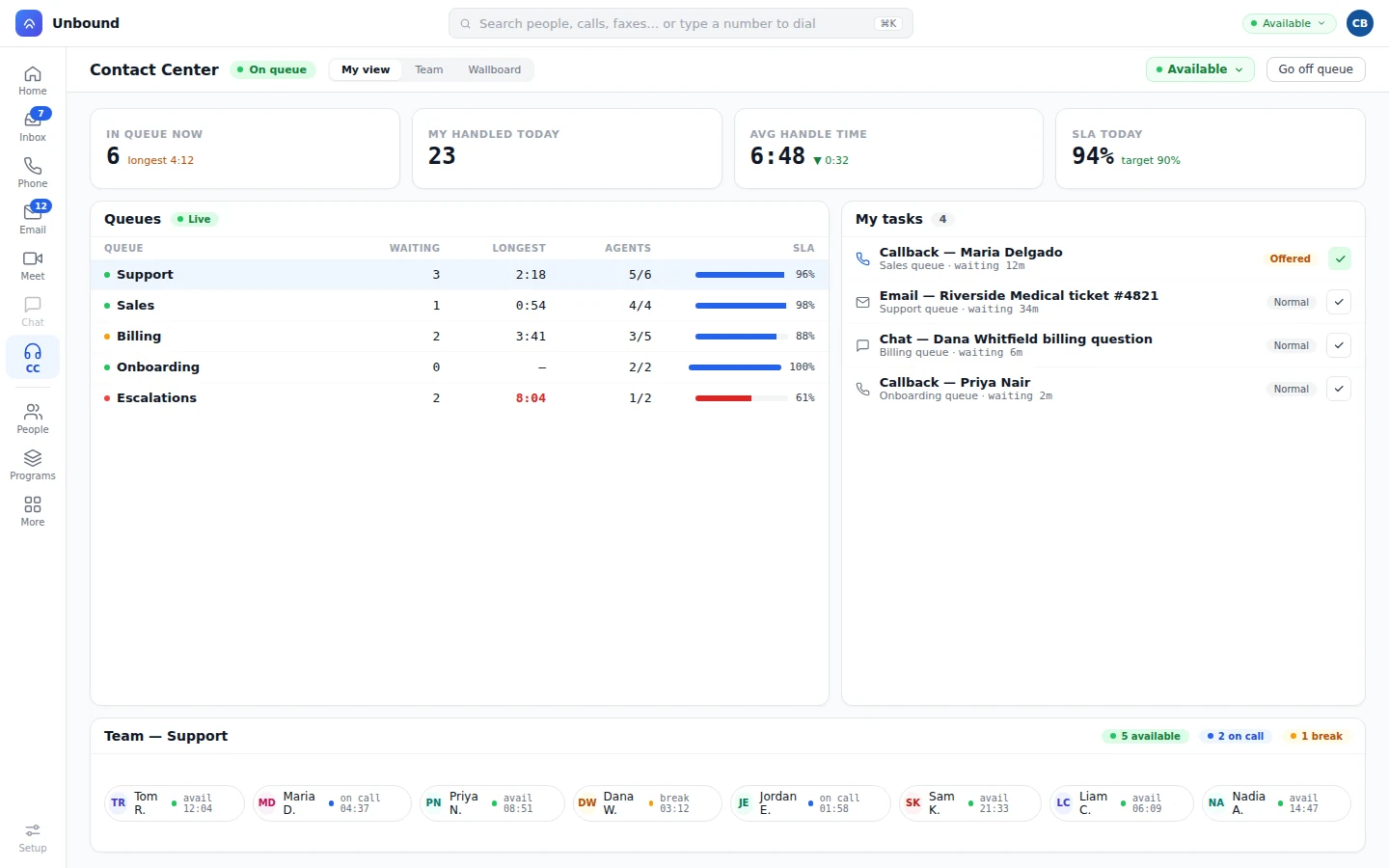
Admins build queues and skills in Setup, next to phone numbers, users, and workflows. There's no second admin tool for the contact center.
One queue can hold voice, chat, SMS, email, and task work side by side.
Skills decide who can take the work waiting in each queue.
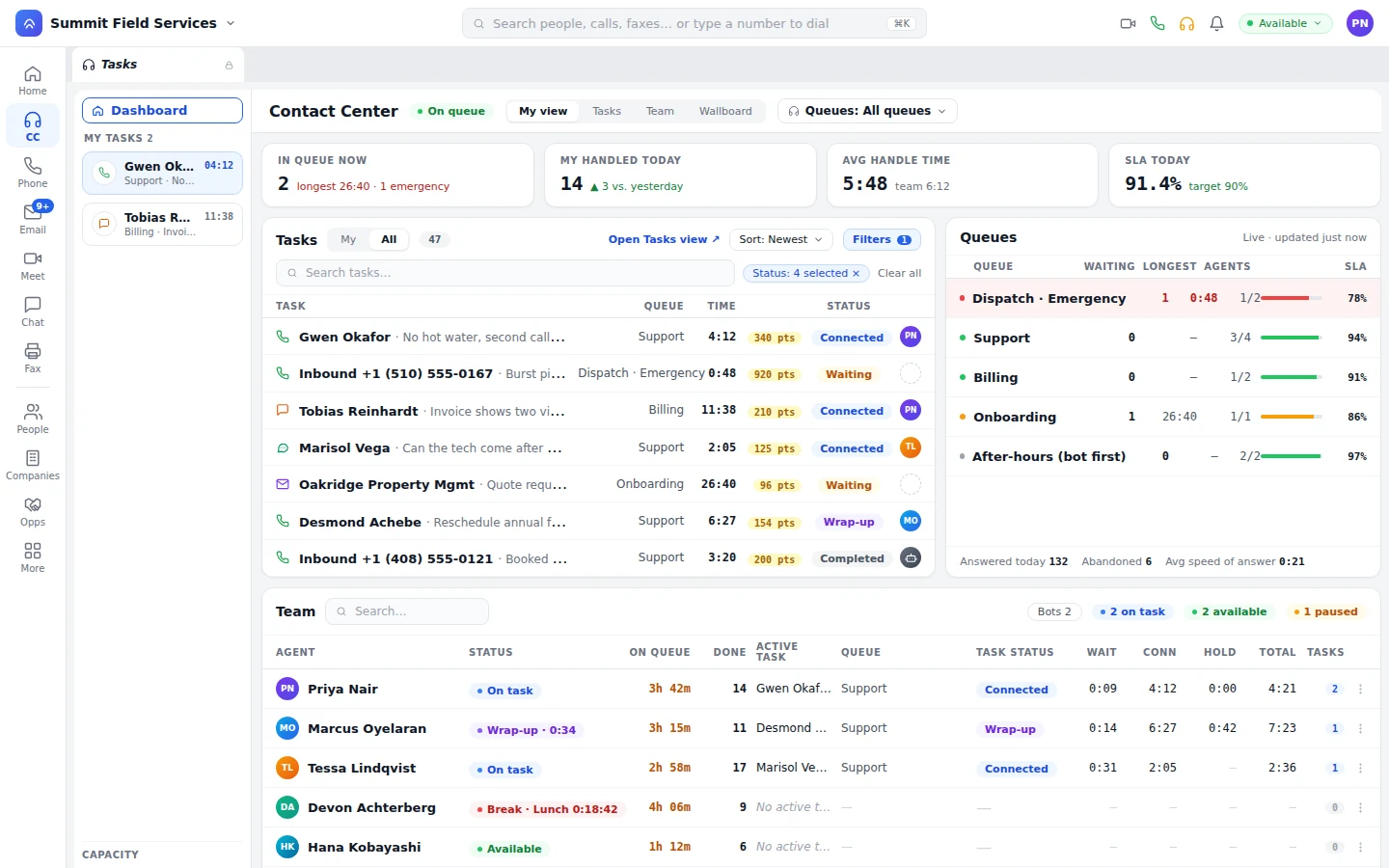
Agents and managers narrow the contact center down to the queues they work.
Every queue shows its service level next to the target you set for it.
A wait policy decides what a customer can do while they wait.
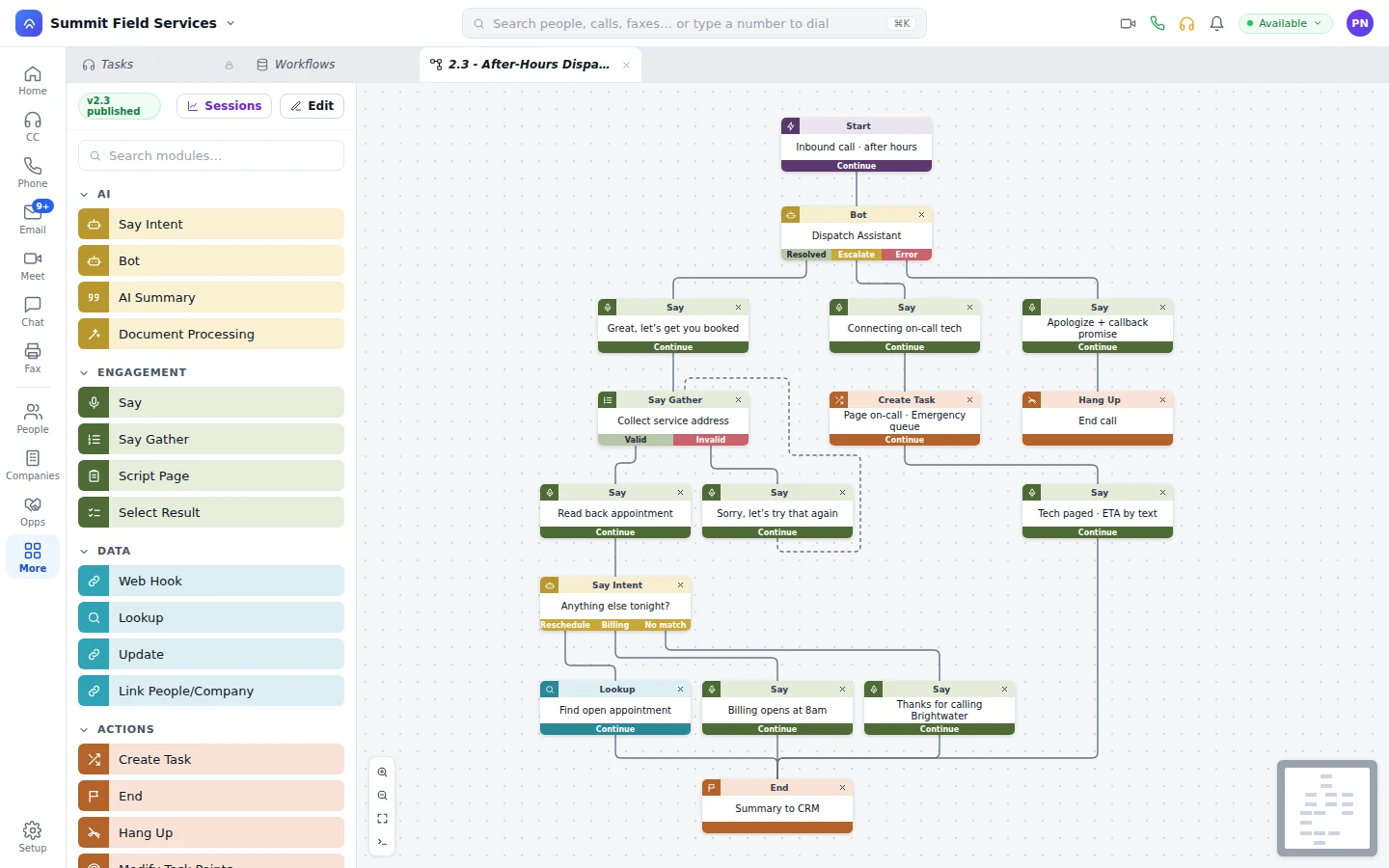
An after-hours queue can run on bots that book the job, page the on-call tech, or promise a callback. By day, bots and people can share it. How bots work
The caller waits, takes a callback, an agent accepts, and the call goes out.
Managers watch the queues update as work moves, with each person's status right beside them.
Ask for a callback, or leave a message. The queue's wait policy sets which of those it offers.
The callback holds the caller’s place as a task, with its skills and priority. When an agent accepts it, the call goes out to the customer.
Yes. Every channel shares the TaskRouter, so a single queue can mix voice, chat, SMS, email, and task work.
Yes. A Time Control step in AI Workflows sends contacts to the queue that fits the hour, like an after-hours queue.
Start a 30-day trial with sample data loaded, look at the live queues, ask for a callback, and accept it as the agent. Then build a queue of your own.